
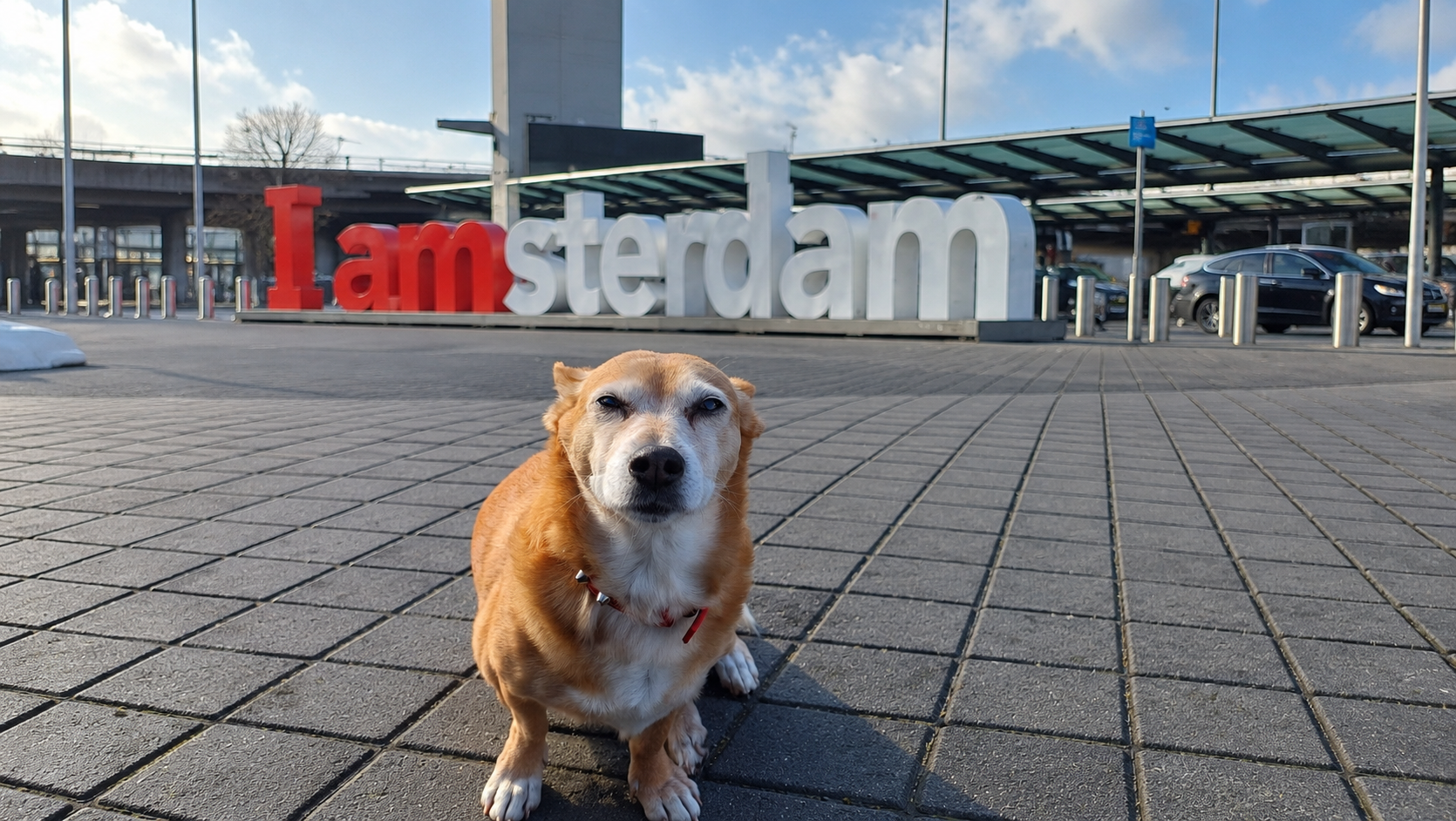
Travelling with your dog can be one of the most rewarding ways to explore the world together. From mountain trails and quiet beaches to charming villages and new cities, having your four-legged companion by your side can make a holiday even more special.
But travelling internationally with a dog requires more planning than simply booking a pet-friendly hotel and buying a ticket. You need to understand the veterinary requirements, prepare the right documents, confirm the transport rules and plan activities that allow your dog to enjoy the trip too.
The good news is that, with enough preparation, travelling with your dog can be perfectly manageable. The difficult part is knowing exactly which rules apply to your particular journey.
The most important rule: never assume that the requirements for one country, airline or previous trip will be the same for the next one.
This guide covers the essentials of travelling with your dog in Europe and beyond, including official documentation, flights, accommodation, outdoor activities and practical lessons learned from travelling with a dog internationally.
Before You Book Your Trip
Before choosing your destination or buying non-refundable tickets, establish exactly what your dog needs to enter the country, travel through it and return home.
Start with the official European Commission guidance:
Travelling with pets and other animals in the EU
You can also consult the European Commission’s detailed information on travelling with dogs, cats and ferrets.
These resources are useful starting points, particularly for journeys within the EU and for understanding the general requirements for entering the EU from outside it.
However, they do not replace confirmation from the veterinary authorities of your country of departure and destination. Countries outside the EU have their own rules, and those rules may differ from the requirements you are familiar with.
Before booking, check:
- The identification and vaccination requirements.
- Whether a rabies antibody titration test is required.
- Which health certificates and official endorsements are necessary.
- When each document must be issued.
- Whether a veterinary inspection is required.
- The airline or transport operator’s rules.
- The requirements for your return journey.
If your trip involves several countries, check every country along the route, including any transit destinations.
Travelling Between EU Countries
Travelling with a dog between EU countries is generally more straightforward when your dog meets the applicable requirements.
For ordinary non-commercial travel, the main requirements usually include:
- Microchip identification: Your dog must have compliant identification. Certain tattoos applied before 3 July 2011 may be accepted under the applicable conditions.
- Valid rabies vaccination: The vaccination must meet the relevant requirements and be valid for the journey.
- EU pet passport: Dogs travelling between EU countries generally need a valid European pet passport issued by an authorised veterinarian.
- Additional requirements where applicable: Certain destinations have extra rules, including treatment against particular parasites.
Check the Rabies Vaccination Carefully
The timing of the microchip and rabies vaccination matters. Your dog’s identification must be in place, or verified, before the vaccination used for travel is administered.
For a first rabies vaccination, the dog generally needs to be at least 12 weeks old, followed by a waiting period of at least 21 days after completion of the primary vaccination protocol.
If your dog already has a vaccination, check its validity and the applicable rules for your destination. A booster administered after the previous vaccination has expired may trigger a new waiting period.
But there is another important point: a vaccination schedule accepted in one country may not be accepted in another.
This is why you should never rely exclusively on the vaccination schedule you normally follow at home. Confirm the requirements with the destination country’s official veterinary authority before travelling.
Keep Your Dog’s Passport With You
Your dog’s passport is an essential travel document. It records identification details and relevant health information, including vaccination records.
Keep the original passport and all required documents with you throughout the journey. Never leave them behind at your accommodation.
Also take clear photographs of every page of the passport and every relevant certificate or veterinary document. Save them on your phone and in secure cloud storage, and consider sending copies to your own email address.
These copies can help if you need to consult information quickly, but they do not replace the originals when authorities require them.
Losing your dog’s passport abroad can be much more complicated than losing your own identification. Depending on where you are, replacing documents or obtaining new veterinary certificates may involve appointments, official authorities, extra costs and delays.
This can be particularly difficult in countries outside the EU, where the procedures may be unfamiliar and the relevant offices may be far from where you are staying.
Treat your dog’s documents as carefully as you would treat your own passport — if not more carefully.
Travelling to Europe From Outside the EU
If you are bringing your dog into the EU from a non-EU country, do not assume that an EU pet passport alone is sufficient.
Depending on the country or territory your dog is travelling from, the requirements may include:
- Microchip identification.
- Valid rabies vaccination.
- A rabies antibody titration test.
- An EU animal health certificate.
- A declaration confirming that the movement is non-commercial.
- Entry through a designated travellers’ point of entry.
The rabies antibody test is not required for every country. The EU has specific lists identifying countries and territories that are exempt from this requirement.
Where a test is necessary, timing is particularly important. The vaccination, blood sample, laboratory result and any required waiting period must meet the applicable conditions. This may mean starting the process several months before departure.
What Is a Rabies Antibody Titration Test?
This is a blood test used to measure the level of antibodies against rabies in your dog’s blood.
A veterinarian takes a blood sample, which is sent to an approved laboratory for analysis. The result is recorded in a laboratory report or other relevant documentation.
The test can be expensive. The rabies antibody test in Portugal cost approximately €150. The exact price depends on the country, veterinarian and laboratory.
However, this test is not automatically required for every international journey. Whether you need it depends on the rules that apply to your route and the circumstances of your dog’s travel.
If you are unsure, contact the competent veterinary authority in the destination country and ask specifically whether a rabies antibody test is required, which laboratories are accepted and when the sample must be taken.
You can consult the official EU guidance on bringing a pet into the EU from a non-EU country.
Health Certificates and Official Veterinary Approval
International travel may require more than an ordinary appointment with your dog’s usual veterinarian.
Depending on the destination, you may need:
- A clinical examination by your regular veterinarian.
- A health certificate completed by a veterinarian.
- An additional examination or endorsement by an official veterinarian.
- Validation by the competent veterinary authority.
- Specific laboratory results or supporting documents.
These procedures are not interchangeable, and the required order matters.
The date printed on a certificate, the date of the veterinary appointment and the date of official validation can all matter.
Do not assume that every certificate must be issued 10 days before travel, or that a certificate valid for one destination will also be accepted by another.
For each trip, ask the official veterinary authority:
- Which certificate is required?
- Who is authorised to issue it?
- Does it need official validation?
- How many days before departure must it be issued?
- How long is it valid?
- Does the destination require a further inspection on arrival?
Some procedures can be completed well in advance, while others must take place within a very short window before departure.
Rules Outside the EU Can Be Very Different
Official European guidance is essential when planning travel to or from the EU, but it does not establish the requirements of every country in the world.
Information found on European websites do not fully match the requirements applied to journey, including the rabies vaccination schedule.
This does not mean that official European guidance is useless. It means that you must check the rules of the country you are actually entering, as well as the requirements for your return journey.
Do not assume that the authorities in another country will accept the same vaccination interval, certificate or procedure that is accepted at home.
If you are travelling outside the EU, contact the official veterinary authority in the destination country directly. Ask for the requirements in writing whenever possible, and keep that confirmation with your travel documents.
Where the requirements are unclear, resolve the uncertainty before buying non-refundable tickets.
Your Return Journey Matters Too
Entering a country and leaving it are two separate parts of the trip.
The documents that allowed your dog to enter a destination may not be sufficient for the return journey. You may need a new health certificate, a recent vaccination, official validation or another procedure.
For example, if you travel from an EU country to a non-EU country and then return to the EU, you must check both the destination country’s entry rules and the EU’s requirements for re-entry.
In certain circumstances, a rabies antibody test completed before leaving the EU can affect whether an additional waiting period applies when returning. The test, vaccination and documentation must meet the applicable conditions.
Plan the return journey before you leave home, not during the final days of your holiday.
Book Your Airline and Confirm Everything Twice
Flying with a dog requires special attention because the airline’s rules are separate from the legal entry requirements of your destination.
Before buying your ticket, read the airline’s pet travel policy. But do not stop there.
Even if you can purchase your dog’s ticket online, contact the airline’s customer service directly to confirm that everything is correct.
Ask them to confirm:
- Whether your dog can travel on your exact flight.
- Whether a place for your dog is available and confirmed.
- The maximum permitted weight of the dog and carrier.
- The maximum carrier dimensions.
- Whether the dog can travel in the cabin or must travel in the hold.
- The required carrier construction and fastening system.
- Whether specific screws, bolts or other fasteners are compulsory.
- Which documents you must present at check-in.
- Whether any additional conditions apply to your route.
If your journey involves connecting flights, confirm the arrangements with every airline operating a segment of the journey.
The airline’s requirements may be checked differently, and a small detail can determine whether your dog is allowed to travel.
Always check the airline’s website and contact its customer service before departure. Do not assume that a carrier accepted by one airline, or on a previous flight, will automatically be accepted again.
Preparing Your Dog for a Flight

Flying can be stressful for some dogs, particularly if they are unfamiliar with carriers or have never travelled by air.
Prepare the carrier in advance and allow your dog to become comfortable with it. Make it a familiar space rather than something it only encounters on departure day.
Flight delays and cancellations can turn a short wait into several hours at the airport, so it is important to prepare for unexpected situations.
Always keep a few essentials in your cabin bag, such as dog snacks, water, a small blanket and anything else your dog may need to remain comfortable. Do not pack everything in your checked luggage, as you may not have access to it during a delay. Make sure you can offer your dog water regularly and follow the airline’s rules about feeding and taking your dog out of its carrier.
If you face a long wait, look for a quieter area away from busy walkways and crowds, where your dog can rest without being disturbed. If airport rules allow it, let your dog settle comfortably on a familiar blanket inside its carrier or beside you, while keeping it secure and supervised. Avoid forcing your dog to interact with other travellers or exposing it to unnecessary noise and activity.
Prepare for the possibility of spending many hours at the airport, or even having to wait overnight. Check the airline’s procedures for delays and cancellations involving pets, and know where you can safely give your dog a break if permitted. A little preparation can make a difficult travel day much less stressful for both of you.
Should You Give Your Dog a Sedative?
Do not give your dog sedatives or other medication for a flight unless your veterinarian has specifically advised you on the risks and appropriate use.
Sedation can affect a dog’s ability to respond to stress and changes in its environment. Air travel also involves changes in temperature, pressure and handling, and animals travelling in the hold are subject to the conditions of the aircraft’s animal transport area.
These factors make it important to discuss any medication with your veterinarian well before departure. The airline may also have restrictions regarding sedated animals.
Make the Carrier Familiar and Comfortable
A few simple preparations can help:
- Place a small blanket carrying your scent inside the carrier, provided it complies with the airline’s rules.
- Include a familiar favourite toy if it is safe and permitted.
- Make sure the carrier is secure, correctly assembled and suitable for your dog’s size.
- Follow the airline’s instructions about collars, harnesses, leads and other accessories inside the carrier.
- Avoid making major changes to your dog’s routine immediately before travelling.
Do not leave loose accessories inside the carrier if they could become tangled or create a safety risk.
Check with your veterinarian if your dog has a medical condition, is elderly or becomes particularly anxious during travel.
Travelling by Car, Train, Bus or Ferry
Flying is not the only way to explore Europe with a dog. Depending on your destination, driving or using public transport may be easier.
Travelling by Car
Driving gives you flexibility to stop for water, walks and toilet breaks. It is particularly useful for rural destinations, mountain areas and places where public transport is limited.
Use a suitable, securely fitted restraint, travel crate or other appropriate system to keep your dog safe. Never allow your dog to travel loose in the vehicle.
Plan stops in safe places away from traffic, and never leave your dog unattended in a parked car in conditions that could put its health at risk.
Travelling by Train, Bus or Ferry
Rules vary by operator. Check whether dogs are accepted, whether a ticket is required, whether a carrier or muzzle is compulsory and whether there are restrictions on size or weight.
For a journey involving several operators, check every part of the route. A dog accepted on one train may not be accepted on a connecting bus.
For ferries, confirm where your dog can stay during the crossing and whether a pet-friendly cabin or designated area must be reserved.
Always confirm the rules before booking.
Can You Take Your Dog Into Shops, Restaurants and Shopping Centres?
This depends on the country, the local rules and the individual establishment.
Across Europe, attitudes towards dogs vary. Some countries and cities are particularly welcoming, with many shops, cafés, restaurants and shopping centres allowing dogs inside. Elsewhere, access may be more limited.
In Portugal, for example, some shops, cafés and shopping centres display a sign at the entrance indicating that pets are welcome inside.
Ask Politely Before Entering
When you cannot find reliable information online, ask a member of staff before entering with your dog.
A simple question can save you time and prevent an awkward situation. If a place does not accept dogs, respect the rules and have an alternative plan.
This is particularly important when travelling alone, because you may not have anyone who can stay outside with your dog while you go inside.
A Dog Carrier Backpack Can Be Useful
A suitable dog carrier backpack can be a useful addition to your travel equipment.
A carrier can help on certain walks, during transfers or when you need to move through a busy area. In some establishments, carrying a dog may make access easier, but being carried does not automatically give a dog the right to enter a shop, restaurant or public building.
Always check the rules, and make sure the carrier is suitable for your dog’s size, comfort and ventilation needs.
Plan Your Holiday Around Your Dog
If you are bringing your dog on holiday, think about what the trip will actually look like for them.
A pet-friendly hotel does not automatically make a destination suitable for your dog, especially if most of your planned activities involve places where animals are not allowed.
Before booking, consider the beaches, trails, villages, restaurants and attractions you want to visit. Check which activities your dog can join and where you may need an alternative.
Travelling Alone With Your Dog
Solo travel with a dog requires additional planning because you will be responsible for the dog at all times.
If you want to visit a museum, go shopping or eat at a restaurant that does not accept dogs, you may not have anyone who can stay with your companion.
You may therefore need to prioritise outdoor activities, choose restaurants with dog-friendly terraces, prepare picnics and select accommodation that makes it easy to explore on foot.
A suitable carrier backpack may also help in certain situations, provided your dog is comfortable in it and the place you are visiting allows access.
Travelling With Family or Friends
If you are travelling with other people, you may have more flexibility. However, do not assume that your dog can simply remain alone in the accommodation while everyone goes out.
Check whether the property allows dogs to be left unattended, and consider whether your dog would feel comfortable in an unfamiliar place.
If you plan to spend several hours away, make sure the arrangement is permitted and suitable for your dog’s needs.
Choose Activities Your Dog Can Enjoy
The best dog-friendly trips are those where your dog is included in the experience rather than left behind for most of the holiday.
Look for suitable walks, permitted beaches, outdoor dining areas and places where you can explore together.
Remember that long hikes, hot weather, crowded environments and unfamiliar terrain may not suit every dog. Adapt the itinerary to your dog’s age, fitness, temperament and health.
Before You Book Pet-Friendly Accommodation
Always confirm directly with the property:
- 🐕 Whether dogs are accepted on your dates.
- 💰 Whether there is an additional fee or deposit.
- 🐶 How many pets are allowed.
- ⚖️ Whether there are weight, size or breed restrictions.
- 🛏️ Whether your dog can be left alone in the room.
- 🛋️ Whether there are rules about furniture or communal areas.
- 🌳 Whether there is a garden or outdoor space.
- 🚗 Whether parking is available.
- 🥾 How far the accommodation is from the trails or places you want to visit.
- 🍽️ Whether there are dog-friendly restaurants nearby.
- 📱 Whether Wi-Fi and other facilities are available if you need them.
And remember:
Pet-friendly does not necessarily mean that you can do everything with your dog.
Every property has its own rules, so confirm the details before booking.
Find a Veterinarian and Official Veterinary Authority
Before travelling, identify a veterinary clinic near your destination and save its contact details.
If you are travelling internationally, you may also need to contact an official veterinary authority before departure or before returning home.
These authorities are not necessarily the same as your usual veterinary clinic. Depending on the country, official certification may be handled by a government veterinary office, an authorised official veterinarian or another designated institution.
Their responsibilities and procedures differ between countries.
This is why we recommend contacting the relevant authority directly rather than relying solely on information from forums or general travel websites.
A Future Digrexo Guide to Official Contacts
At Digrexo, I plan to develop more detailed guides for individual countries, including official veterinary authority contact details, relevant office addresses, appointment procedures and information about where travellers can obtain the required documentation.
For example, when preparing a trip, you may need to identify the official veterinary office responsible for your region, rather than simply finding a nearby private veterinarian.
These country-specific guides will make it easier to organise appointments, confirm deadlines and plan the journey well in advance.
When available, the guides will be linked from our individual pet-friendly destination articles.
How Long Should You Plan to Travel With Your Dog?
There is no universal minimum number of days that makes an international trip worthwhile. The right decision depends on the distance, the paperwork, the transport arrangements and your dog’s needs.
However, if you are travelling between a non-EU country and the EU, the preparation can be considerably more complicated than a straightforward trip within the EU.
You may need veterinary appointments, laboratory tests, official certificates, inspections and additional time to meet the relevant deadlines.
As a practical recommendation, I would generally consider a trip of 15 days or more when planning a complicated international journey with a dog. This is not an official requirement, but a personal planning guideline based on the time, cost and effort involved.
For a trip lasting only four or five days, the preparation and travel may take up a significant part of the holiday, particularly if you need to attend appointments shortly before departure and again before returning.
For a stay of several weeks, the preparation may feel more worthwhile.
Before deciding, compare the total costs, the time needed for appointments, the travel time and the potential stress for your dog. Every trip is different, so make the decision based on your own circumstances.
Create a Dog Travel Folder
Before departure, prepare a folder containing your dog’s original documents and a digital backup.
Original Documents
Depending on your journey, these may include:
- 📕 EU pet passport, where applicable.
- 🐕 Microchip identification details.
- 💉 Rabies vaccination records.
- 🧪 Rabies antibody test results, if required.
- 📄 Animal health certificate, if required.
- 📝 Relevant declarations and supporting documents.
- 🛃 Official endorsements or inspection records, where applicable.
- ✈️ Airline or transport documentation.
Digital Backup
Take clear photographs of every page of the passport and every relevant certificate. Store them securely on your phone and in the cloud, and consider sending copies to your own email address.
Always carry the original documents when they are required. Digital copies are useful backups, but they do not replace the originals.
Keep the folder somewhere safe and accessible throughout the trip. Do not pack essential documents in checked luggage or leave them unattended in your accommodation.
Who Should You Contact?
For an international journey with your dog, contact the organisations responsible for each part of the process.
European Commission
For general information about the EU’s pet travel rules:
Travelling with pets and other animals in the EU
Official veterinary authority in your country of departure
For the requirements and procedures that apply before leaving.
Official veterinary authority in your destination country
For entry requirements, certificate validity, additional tests and official procedures.
Your veterinarian
For microchip identification, vaccination, laboratory testing, health advice and preparation for the journey.
Your airline or transport operator
For carrier specifications, booking conditions, pet transport availability and travel rules.
Your accommodation
For pet policies, fees and restrictions during your stay.
Where possible, obtain confirmation in writing and keep it with your travel documents. Do this before purchasing non-refundable tickets.
The Digrexo Rule
International travel with a dog is not simply a matter of finding the right document. It is about understanding which requirements apply to your specific journey, who is responsible for confirming them and when each procedure must be completed.
The country you leave has its own rules. The country you enter has its own requirements. The airline or transport operator has its own conditions. Your dog must also meet the relevant veterinary requirements.
That is why the Digrexo approach is simple:
Don’t assume. Confirm. Plan ahead. Keep your documents safe.
Arrange the necessary appointments, confirm the transport rules and make sure your accommodation and activities suit your dog before committing to the trip.
With the right preparation, travelling with your dog can be manageable and deeply rewarding. The goal is to arrive with the paperwork in order, the practical arrangements confirmed and enough time to enjoy the journey together.
Plan first. Book second. Travel with peace of mind.
Explore More
Planning an adventure with your dog? Explore our pet-friendly destination guides for accommodation, nature trails, beaches and practical travel tips. We will also be adding country-specific guides with official veterinary contacts and information to help you organise your dog’s documents and appointments before travelling.