
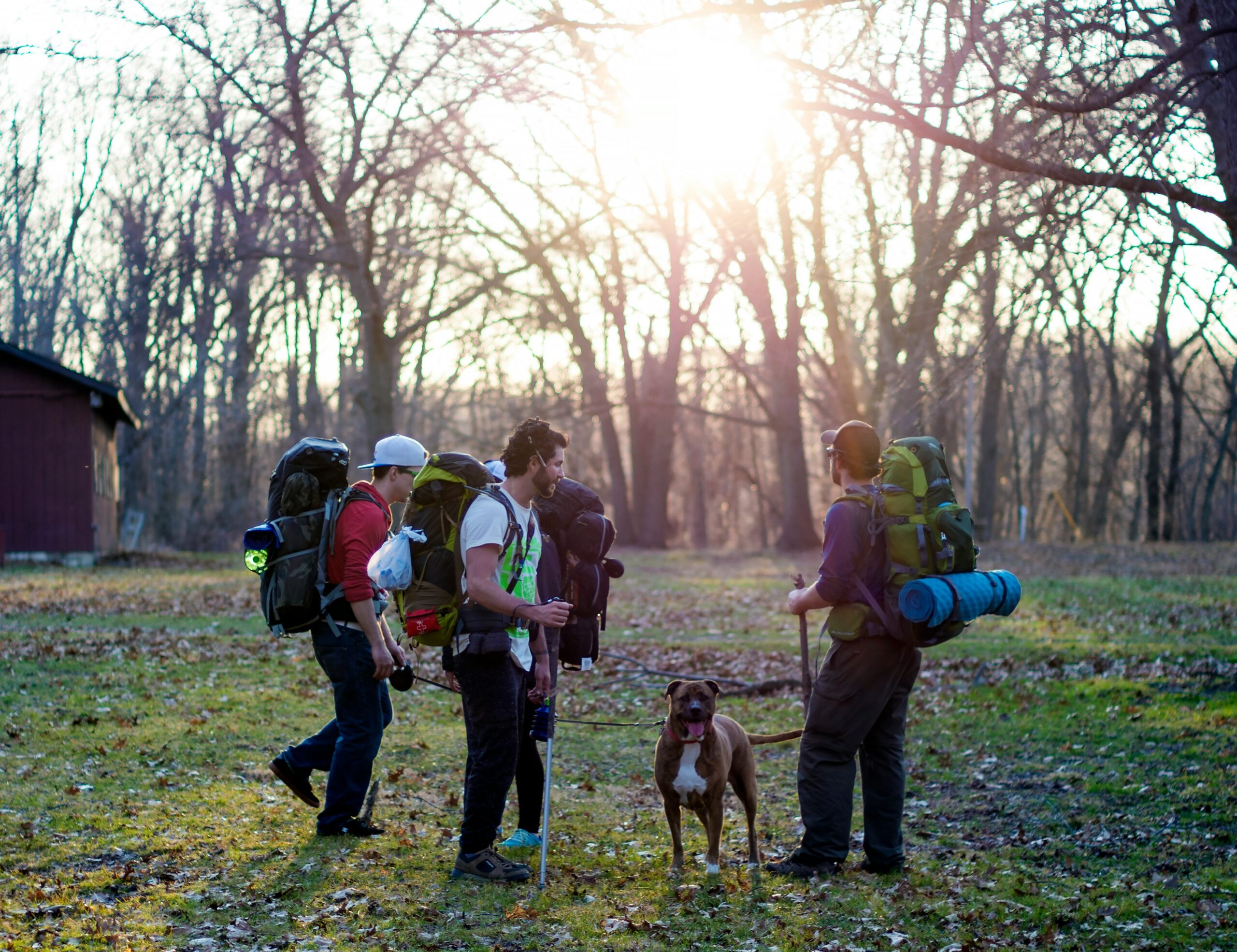
There is a Gerês you can see from the road.
And then there is the Gerês that only begins to reveal itself when you leave the car behind and truly enter the mountains.
The further you follow the trails, the more the landscape seems to change. Roads give way to ancient paths, forests open onto granite slopes, rivers disappear into narrow valleys and, suddenly, water appears where you least expect it — rushing over rocks, cascading down mountainsides or gathering in small natural pools.
This is the wild side of Gerês.
Peneda-Gerês National Park is not simply a collection of beautiful viewpoints. It is a vast mountain landscape shaped over thousands of years by water, wind, ice and human activity.
At higher elevations, traces of the last Ice Age can still be found, including glacial cirques, moraines, small mountain lakes and U-shaped valleys. The combination of altitude, terrain and different climatic influences — Atlantic, Mediterranean and continental — also helps explain the extraordinary diversity of habitats found throughout the Park.
And perhaps there is no better way to experience this landscape than on foot.
Trails That Take You Deeper into Gerês
Gerês has an extensive network of hiking trails, ranging from relatively short walks to demanding mountain crossings.
Among them is the GR50 — the Peneda-Gerês Great Route, a trail of around 190 kilometres divided into several stages. It crosses the Peneda, Soajo, Amarela and Gerês mountain ranges, as well as the Mourela plateau and the mountains of Castro Laboreiro. It is one of Portugal’s major long-distance hiking routes and has an interesting distinction: it runs entirely through mountainous terrain.
But the GR50 is about much more than kilometres.
Along the route, you will find ancient shepherds’ paths, routes once used for seasonal journeys between villages and mountain pastures, pilgrimage paths, old stone roads and even former smuggling routes. You can walk through the landscape while, at the same time, passing through different chapters of the history of the communities that have lived in these mountains.
One particularly interesting stage connects Ermida and Fafião. The 9.4-kilometre route follows ancient shepherds’ paths, passing along the Arado, Conho and Fafião rivers, through granite formations, mixed woodland, viewpoints and the Curral de Pinhô. The stage ends near the Fafião Wolf Trap, a traditional structure associated with the historic protection of livestock from wolves.
It is precisely this kind of trail that shows why walking through Gerês can feel so different from simply visiting its best-known attractions.
Here, the path tells a story too.
Waterfalls Hidden Among the Mountains
Water is one of the great protagonists of Gerês.
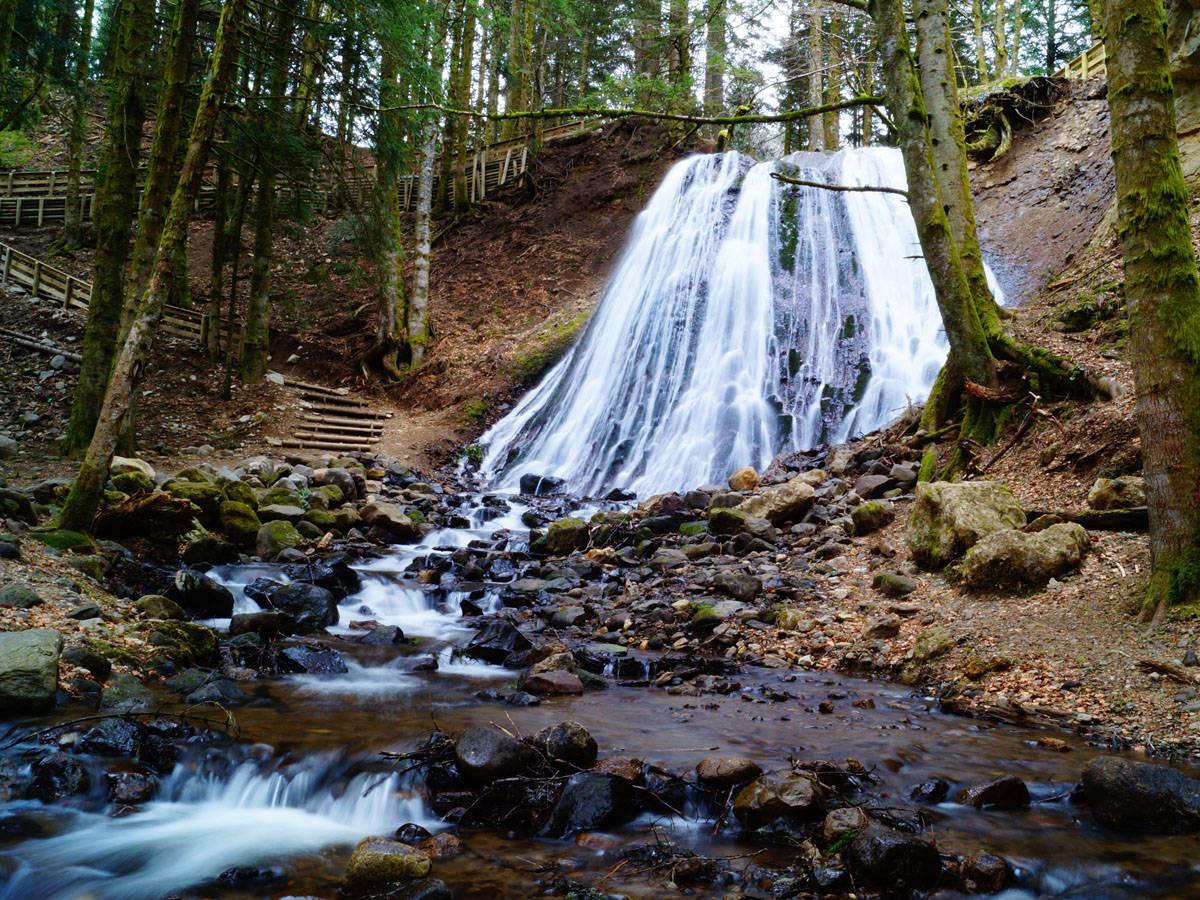
Heavy rainfall, combined with the rugged terrain of the mountains, feeds an extensive network of rivers and streams. As water moves through the mountains, it encounters steep slopes, rocks and narrow valleys, creating waterfalls, rapids, pools and small natural lagoons.
That is why so many waterfalls are scattered throughout the region.
Some have become famous and appear in almost every Gerês guide. Others remain hidden among trees and rocks, requiring a hike to reach them.
Among the best known are Arado Waterfall, Leonte Waterfall, Portela do Homem Waterfall and Tahiti Waterfall, also known as Fecha de Barjas.
But perhaps this is precisely where we should resist the temptation to make a simple list.
Because a waterfall in Gerês is rarely just a waterfall.
It is the walk through the forest to reach it. It is hearing the water before you can see it. It is crossing a stone bridge. It is stumbling upon a small, unexpected cascade along the trail.
On the Ermida–Fafião stage of the GR50, for example, the route follows the Arado River and passes by Rajada Waterfall before continuing along the Conho and Fafião rivers.
The destination is beautiful.
But in Gerês, the journey there can be even more interesting.
Ancient Forests and Forgotten Paths
If the waterfalls represent the more dramatic side of Gerês, the forests reveal a much quieter version of the mountains.
The National Park contains several forest areas of great importance, including Albergaria Forest, Ramiscal Forest and Cabril Forest. The Portuguese Institute for Nature Conservation and Forests (ICNF) highlights these landscapes as areas with characteristics that are increasingly difficult to find elsewhere in Portugal.
Albergaria Forest is particularly special.
Running through its ancient oak trees is the Roman Geira, the old road that once connected Bracara Augusta, modern-day Braga, with Asturica Augusta, now Astorga in Spain.
Some of the ancient milestones that once marked distances along the Roman road still remain scattered through the landscape.
It is one of those experiences that makes Gerês difficult to sum up.
You can be walking through a forest that appears almost untouched and, a few metres later, realise that you are literally following in the footsteps of people who crossed these mountains almost two thousand years ago.
Nature and history meet on the same trail.
Landscapes Shaped by Ice, Water and Stone
Gerês may seem timeless, but its landscape is far from static.
Granite dominates much of the mountain ranges, helping to create the immense rock formations, slopes and valleys that define the region. At higher elevations, the movement of glaciers during the last Ice Age left marks that can still be recognised in the landscape today.
Then came the rivers.
And they continue to shape the mountains.
It is this combination of stone, water and altitude that creates much of Gerês’ distinctive visual character.
On a single trail, you can move from dense woodland to an exposed granite slope, come across a small stream and, just minutes later, reach a high point where the valley suddenly opens out before you.
One of the best-known places to experience this scale of the landscape is Pedra Bela, one of the region’s great viewpoints, overlooking the Caniçada reservoir and the surrounding valleys. Other notable viewpoints include Junceda, Fraga Negra, Mirante Velho and Pé de Cabril.
And not every viewpoint needs to be the final destination.
Sometimes, the best viewpoint is simply the one that appears around the next bend in the trail.
A Landscape Full of Life
It is impossible to talk about the nature of Gerês without talking about the animals that live in these mountains.
The diversity of habitats supports an exceptionally rich range of wildlife. According to the ICNF, 235 species of vertebrates have been identified in the National Park, 204 of which are protected at national or international level, while 71 are included on Portugal’s Red Book of Vertebrates list of threatened species.
Among the species associated with the Park are roe deer, otters, Pyrenean desmans, Iberian water lizards, golden-striped salamanders and several bird species of conservation importance.
And, of course, there is the Iberian wolf.
Wolves still roam some of the wildest areas of the region, but seeing one is another matter entirely. They are extremely elusive and difficult to spot — and that is precisely why their presence says so much about this place.
Gerês is not a landscape created for visitors to admire.
It is a living ecosystem that existed long before we arrived.
And that changes the way we should walk through it.
The Wild Side Is Not a Playground
It is easy to look at a waterfall or natural pool and immediately think about getting into the water.
But the beauty of these places can also hide real dangers.
Rocks around waterfalls can be extremely slippery, currents can be much stronger than they appear and conditions in the mountains can change quickly. The GR50 project itself specifically warns of the risk of falls near waterfalls and natural pools.
It is also important to remember that we are in a protected landscape.
Trails should be respected, wildlife should not be disturbed, and we should never leave designated paths or leave rubbish behind.
In the mountains, exploring does not mean taking control of the landscape.
It means learning how to move through it without damaging it.
The Best Part May Be the Part You Don’t Photograph
There are waterfalls that appear on every map.
There are viewpoints everyone knows.
There are trails recommended time and time again.
But some of the most memorable moments in Gerês happen precisely between those places.
A misty morning climbing through the mountains.
The silence inside a forest.
The sound of a river hidden somewhere below the trail.
A garrano suddenly appearing between the trees.
An ancient stone path disappearing into the forest.
Or simply stopping for a few minutes and realising that there is nothing else to hear but nature.
That is why Gerês is worth exploring on foot.
Not simply because there are extraordinary places to reach, but because the journey itself is part of the destination.
And when we leave the main road behind, we finally begin to discover what makes Gerês truly special.
Its wild side.
Continue Exploring Gerês
There is still much more to discover.
Explore the different sides of Gerês through its trails, waterfalls, ancient forests, wildlife and breathtaking viewpoints:
· The Best Trails in Gerês
· The Waterfalls of Gerês You Shouldn’t Miss
· Mata de Albergaria: Walking Through an Ancient Forest
· GR50: The Ultimate Gerês Hiking Route
· Where to Find Wildlife in Gerês
· The Most Beautiful Viewpoints in Gerês